#2025AHC. A Dose of Realism to Start
It all began with talk of dolphins, as the 1,000 plus delegates sat through the first set of presentations.
Why? A major owner of a portfolio of hotel assets was asked how they saw the UK hotel market and he candidly compared it to a chosen animal – a dolphin whose habit of diving in and out of the water resembled the fact that market fundamentals are currently volatile and unpredictable.
Refreshingly, presentations were relatively frank on this point. The hospitality sector has been battered by a range of challenges that include high inflation, rising operating costs, human resource challenges, a cautious consumer in some segments and high costs of finance.
We also heard that whilst statistics are only semi reliable, there has been low growth and productivity in secondary cities in the UK and the global uncertainty caused by ‘Trump tariffs’.
As if this wasn’t enough -in an industry where payroll is a key cost but also a critical element in the delivery of hospitality- the Government’s last budget changed the rules on National Insurance. The result is that businesses pay NICs at an earlier point on employee salaries and a higher overall contribution. This has had the unintended consequence of significantly raising costs for many employers leading to reductions in manpower. ONS and UK Hospitality report a loss of up to 4% of all jobs in the sector.
Oh, and to finish off…more is coming down the track . A new business rates system and a revaluation of all properties takes place in April 2026. Thanks to insights provided by Karen Callahan of Knight Frank it seems that potentially revaluations (based on a hotel’s previous two years of trading earnings) may take account of premium room rates achieved post pandemic but not subsequent trading cost increases. Estimates vary but this could lead to a reduction in bottom line earnings.
All this adds to the difficulty in having a clear long term view .
Working through the haze to get clarity
As operators and investors seek to find their way through this haze to get clarity and move forward, the signs are that remedial actions are already taking place.

The Three ‘R’s’ of the Conference-should it be Four of Five?
The theme of the event was Refresh, Rebuild, Rise. However the event in our view a fourth and fifth set of truisms also apply-Realism and Rebound:
A comprehensive review of the transactions market by Carinne Bonnejean of Christie & Co’s did soberly point out that transactions have declined in the UK year on year in what was diplomatically described ‘a mixed performance landscape’ . However the fact remains that the sector still holds its own against other real estate investment options. “The UK is maintaining its appeal as a ‘safe haven’ for investors by sitting outside of the EU …‘the sector continues to… attract[s] significant investment interest domestically and internationally’…Our argument for realism and rebound also centres on the following:
- Drivers of demand still exist. At a worldwide level, travel and tourism continues to grow. UK inbound tourism is forecast to have a record year in 2025. VisitBritain projecting a record 43.4 million visits and £33.7 billion in spending by international tourists.
- By 2034 1 in 10 jobs internationally will be tourism related (as set out by Flavio Leoni, #Booking.com in his presentation).
- Limited potential future competitive supply exists due to a benign supply pipeline caused by a lack of development activity in the last few years
- Debt markets are back -sources of traditional finance are available even if (candidly)working through that process may still be a significant challenge.
- Major transactions have taken place: new owners have acquired Village Hotels, easyhotels, Dalata Hotels, Bloc Hotels and the Marriott portfolio. They will be actively seeking to maximise asset value through investment, repositioning, growth and selective disposals.
- New owners and investors are emerging: A panel comprising some of the largest investor owners of hotels at the AHC indicated that whilst UK may be coming off its peak in trading terms it is perceived as ‘a good time to re-enter from an investment point of view’.
Other activity in line with our chosen ‘Rebound’ theme that provide evidence, encouragement and clarity of activity in the sector include:
- In the pub sector, after many years of treating its rooms business as a secondary arm, Greene King is finally seeking to exploit its pubs with rooms portfolio – as set out clearly in the conference by its new MD Jodie Tate
- Hotel brands continue to segment and adapt to different propositions and development criteria
- Different experiences including treehouses, lodges, pods and glamping have become established as accommodation alternatives (or add-on’s to an existing hotel business) – whether as stand alone businesses or in a deconstructed hotel format such as in the Tawny Hotel
- Other exciting new initiatives include Zedwell’s opening of new capsule pod hotels in London
- Resorts continue to be developed to fit growing leisure demand
- Wellness tourism is still on the rise, as more people look for ways to take care of their mental and physical health.
- Individual operators have recalibrated pricing, changed opening hours, remodelled service formats and used technology to replace some business systems.
- Although Ai is a disruptor it is still only ‘a shiny new toy’ we are all playing with and whilst it has moved from a passive analytical tool to one that can also implement processes, this may add efficiencies and cost savings in some administrative functions.
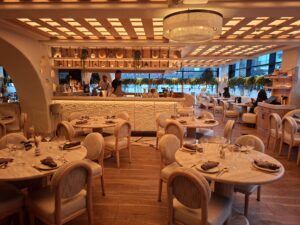
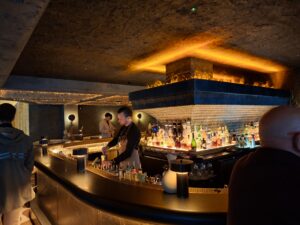
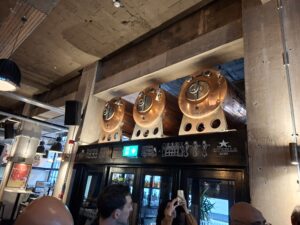
Off site, the conference also enabled some of us to visit the ‘non rooms’ elements of the hospitality sector. Despite the numerous challenges facing restauranteurs, site visits organised by Thom Hetherington* of Landing Light showcased the vibrant Manchester restaurant scene* (see photos below) where newly evolved brands by ambitious groups such as Permanently Unique confirm the entrepreneurial spirit that still exists in this segment.
Looking Forward
The Government has at times given the impression that the hospitality sector is simply comprised of lower wage activity and is of lesser importance than Hi Tech.
We find through our our own consulting activity at both regional and local level that there is genuine interest in attracting more visitors and developing destinations. There is widespread recognition of the hospitality sectors importance in placemaking. Creating additional accommodation in whatever form (hotels or non serviced accommodation) together with restaurants, bars and event venues helps create attractive places to live and work and generates a multiplier effect through increased visitor spends and the wider economic benefits of additional employment.
After a challenging period, the sector shows every potential to rebound and grow in a range of different business formats, with owner operators still creating unique venues from their own resources and major brands reinventing their formats to suit differing construction and viability constraints.
The final presentation, by Surinder Arora who from very humble beginning now owns a major portfolio of hotels encapsulated the ability of individuals and businesses to respond to challenges and reshape the industry in times of uncertainty.
-When Everything Is Uncertain Everything That Is Important Becomes Clear-
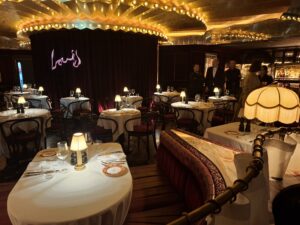
Postscript: *Images below from a range of new restaurant venues visited in the Manchester ‘F&B Safari’ that took place during the event organised by Thom. The brands shown include ‘Exhibition’, ‘Fenix’, ‘Louis’ and ‘Pip’.

Do contact us on 07785 514831 to add to these views or challenge or debate them further and contribute to further evolving the sector.